












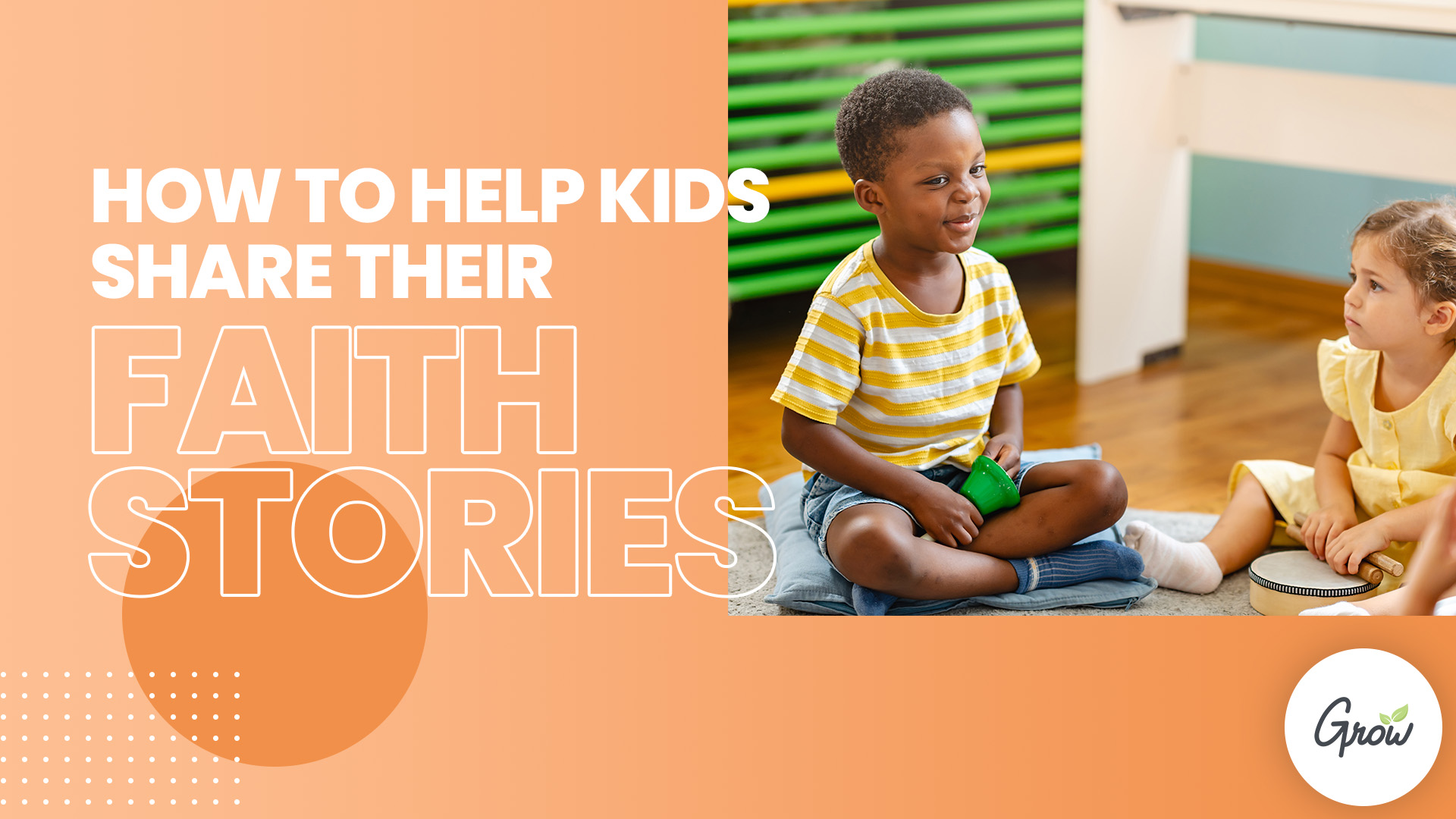
There are so many great reasons why many of us stepped into kids ministry. Maybe it was a love for animal crackers, a desire for more glitter-based artwork, or the absolute thrill of wearing a costume at nine o’clock in the morning on a Sunday. These are all valid reasons—but underneath all the glamour, we were really motivated by the possibility of helping kids grow in their faith.
That’s the heart of what we do. We want to see kids know Jesus, follow Jesus, and build a faith that lasts. But as you’ve probably learned, helping kids grow can be a little more complicated than it sounds.
How do you measure spiritual growth?
What “counts” as progress?
Which metrics actually matter — and which ones just make us feel busy?
For many of us, when we think about spiritual habits, we go straight to the classics—reading the Bible, praying, going to church. And yes, those things are very important. But what if we could zoom out and think about discipleship in a more holistic way?
That’s why our discipleship strategy focuses on four spiritual habits — Spending Time with God, Spending Time with Others, Using Your Gifts, and Sharing Your Story. We believe these habits sit at the center of spiritual growth, and they become the lens through which you can see everything you do each year—your teaching, your events, your strategy with parents, and even how you empower your volunteers.
We want to help kids build these four habits — and anytime we see a kid practicing even one of them, we can celebrate it as a sign of real spiritual growth. So in this blog, let’s focus on just one of these habits–
SHARING YOUR STORY
Kids need to learn how to talk about God — but this habit is so much bigger than just knowing how to explain their salvation story (although that’s important too). Sharing your story is the spiritual habit of making faith a natural, everyday part of how we talk, think, and relate to others.
It’s about discovering God in the small details of their lives and learning to express what they’ve found. When kids talk about what God is doing in their story, it helps them believe it more deeply, understand it more clearly, and share it more confidently. That’s why this habit matters so much for long-term spiritual growth.
So how can we help kids learn to Share Their Stories? Here are a few practical ways to start…
- CREATE CONSISTENT SMALL GROUPS. Small groups are where so many spiritual habits take root. In consistent groups, kids feel safe enough to open up, share honestly, ask questions, and connect the dots between their life and God’s story. Give them conversation starters that help them talk about their week. Challenge them to share an important faith moment with a classmate, teammate, or neighbor. Small groups offer the steady, relational space kids need to practice sharing what they believe.
- SHARE YOUR STORIES. Kids learn from what you model. So when you teach, make it a priority to share your own stories—not just your highlight-reel moments, but the messy, honest, real-life ones too. Show them how God shows up in ordinary days, confusing moments, disappointments, and celebrations. Your vulnerability gives kids permission to be vulnerable too, and your stories help them learn how to recognize God in their own.
- INVITE KIDS AND VOLUNTEERS TO SHARE THEIR STORIES. Your stories matter—but they aren’t the only stories that help kids grow. Look for natural ways to let kids and volunteers share what God has done in their lives. Capture a volunteer’s story on video for your weekly program or social media. Share a kid’s story (with permission!) in an email to parents. In small groups, let kids practice telling their stories in simple, age-appropriate ways. Practice builds confidence, and confidence builds habits.
- CREATE SPACE FOR FEEDBACK. Kids absolutely have questions. Lots of them. Create space for them to ask questions about the stories you tell or the ones they’re reading in Scripture. Let them share what stood out, what confused them, and what helped them understand God better. Questions aren’t interruptions—they’re invitations into deeper conversation.
And if you’re looking for new ways to help your kids share their stories, here’s a couple of great places to start…

The My Storybook activity helps kids see their everyday life as the stuff great stories are made from. In this activity from Grow Kids, kids explore how God’s big story intersects with their own. Through guided prompts, reflection activities, and fun creative exercises, they’ll look at their personalities, experiences, relationships, and moments from their week to see themselves as active participants in the story God is writing.

The True Story Challenge activity is a fun way for kids to reflect on who they are and what makes them unique. With daily prompts, kids will scribble, sketch, and journal their thoughts as they relate to lessons we’re learning together from the Bible. This challenge helps kids discover how God’s story connects with their own — whether they’re learning to trust Jesus, understanding that God hears their prayers, or recognizing the power of the Holy Spirit. Through journaling, kids will learn their stories matter and God is writing something amazing in their lives.
There’s so much you can do to help kids share their stories. And if you’re feeling overwhelmed right now, we’d love to help. When you use Grow Kids Curriculum, you’ll find everything you need to help your kids build the habit of sharing their stories — weekly teaching materials, complete event guides, discipleship activities, small group guides, and tools that help parents invest at home. We’re here to help you disciple kids and help them grow in their faith.









In this post, here’s what we’ll cover: